If you’ve spent any time looking into barndominiums, you already know the pitch: steel frame, open floor plan, lower cost per square foot than a traditional stick-built home. What nobody tells you upfront is how wide the gap is between the ones that came in under $100,000 and the ones that blew past budget by mile three. The difference usually isn’t the building itself. It’s the decisions made before the first post went in the ground — the land prep, the loan structure, the kit source, and whether the owner knew what questions to ask.
This article walks through 30 real barndominiums built at or under $100K, with honest notes on what made each one possible. Every barndominium featured in this article has a floor plan available. If you see a build that fits your vision, scroll to the bottom to find out how to get the plans. At the end, there’s also a full section on construction loan approval — because a great plan doesn’t mean much if you can’t get it financed.
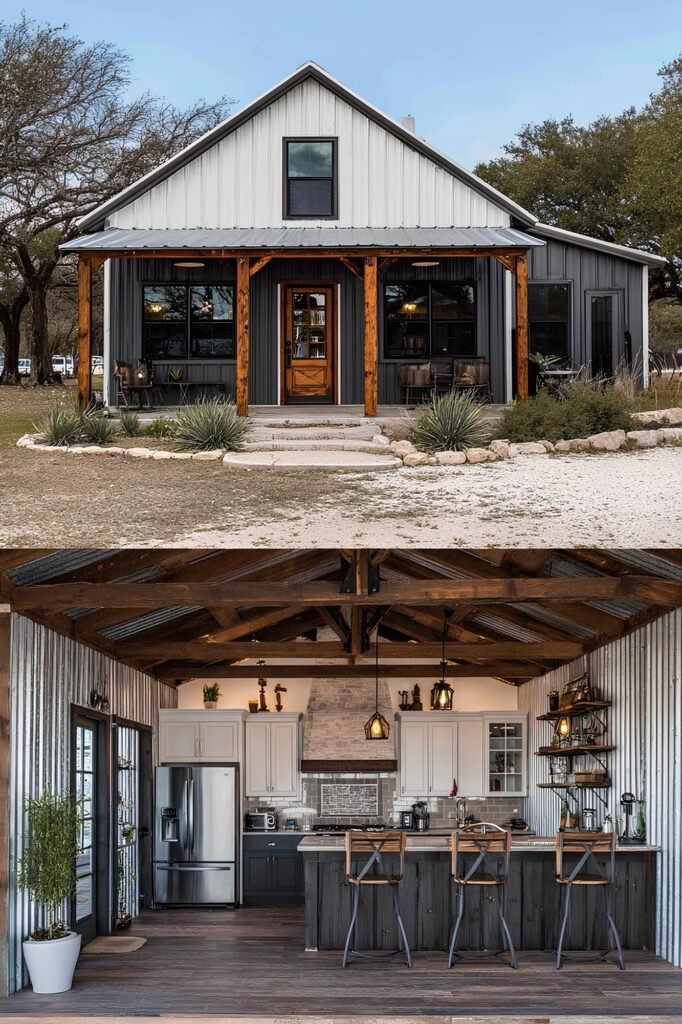
Barndominium 1
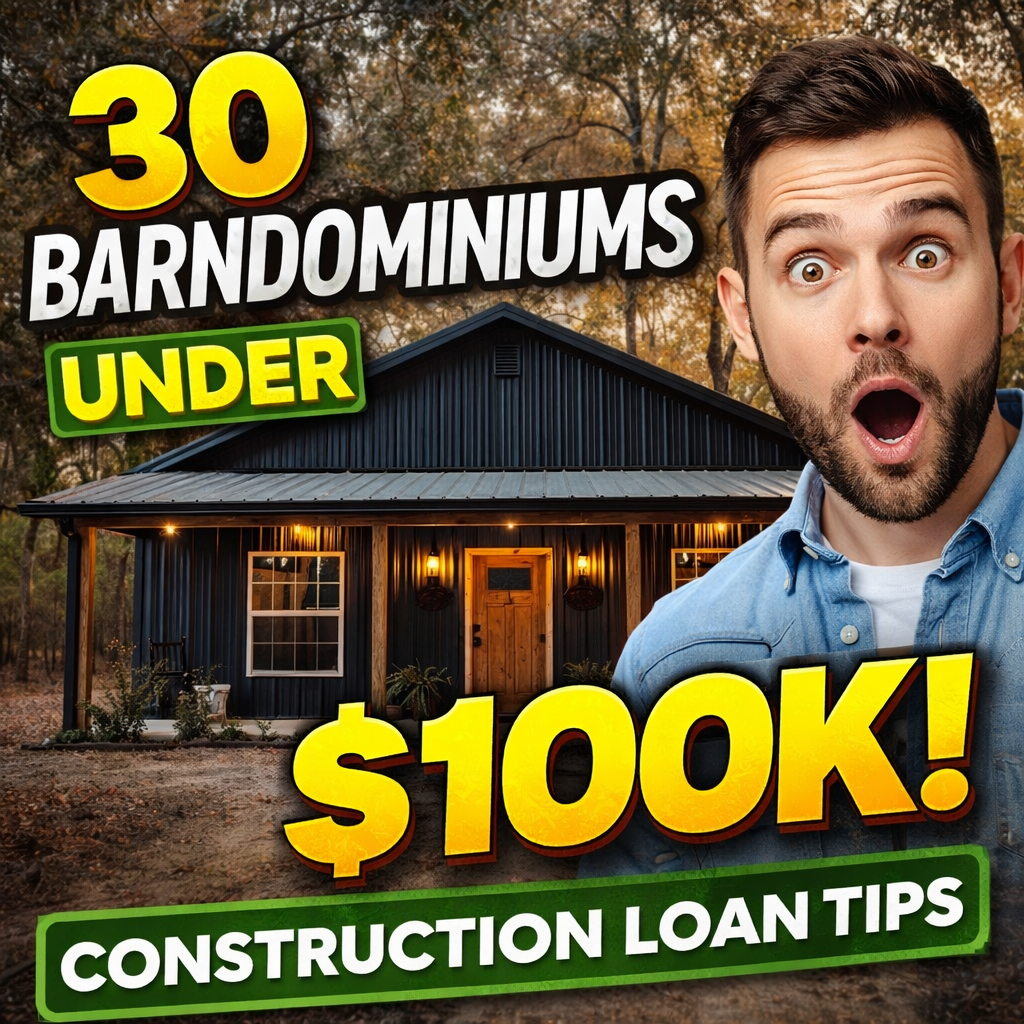
Dark gray metal siding, white gable, covered front porch with cedar posts, and a wood entry door. Est. 1,000–1,200 sq ft. Est. build cost: $85,000–$95,000
Why $100K Is Still Achievable — But Only If You Understand What’s Included
The number that trips people up is what “cost to build” actually means. When someone says their barndominium came in at $85,000, they often mean the shell kit, erection labor, and interior rough-in. They’re not counting the land, the well, the septic, the driveway, or the pole barn permit fees. Those add-ons can run $30,000 to $60,000 depending on your county.
That said, the structure itself — walls, roof, doors, windows, insulation — can absolutely come in under $100K if you’re building in the 1,000 to 1,800 square foot range, using a prefabricated metal building kit, and doing meaningful owner-builder work yourself. The people in this article did exactly that.
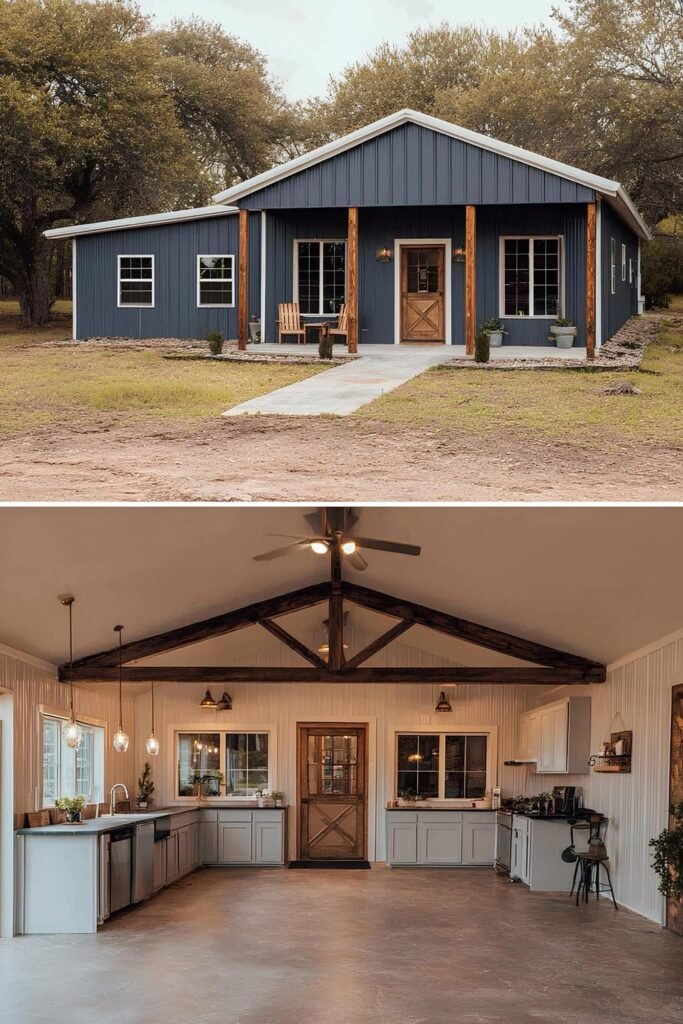
Barndominium 2
Navy blue vertical metal siding, white trim, cedar porch posts, and a wood barn door entry. Est. 1,200–1,400 sq ft. Est. build cost: $90,000–$100,000.
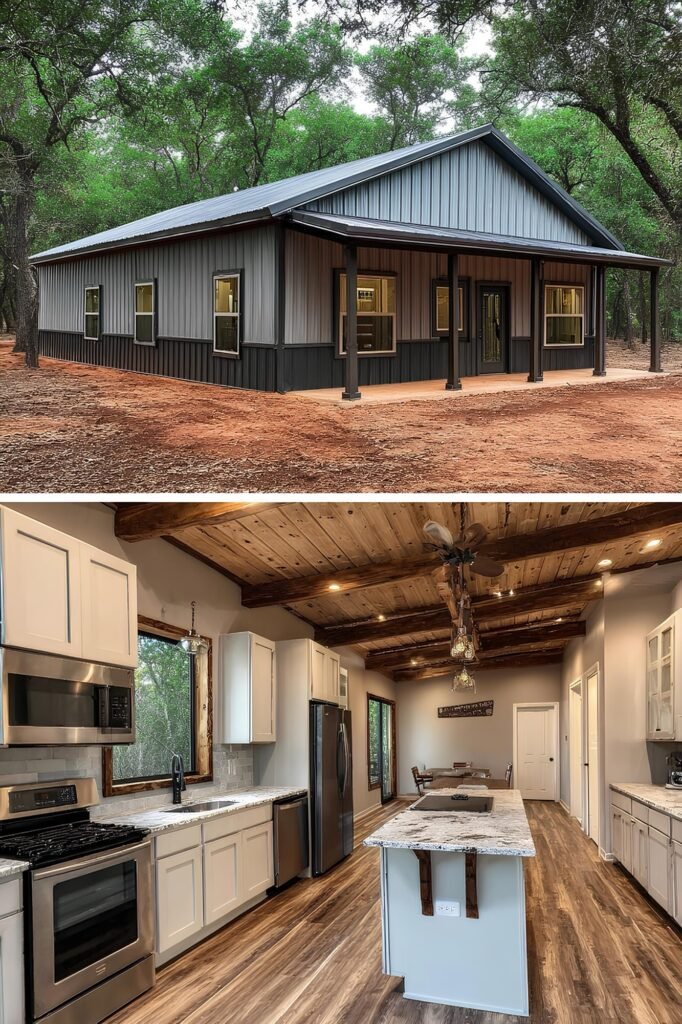
Barndominium 3
Gray and charcoal vertical metal siding, dark metal roof, covered front porch with wood posts, set on a red clay lot surrounded by trees. Est. 1,400–1,600 sq ft. Est. build cost: $92,000–$100,000.
The Kit Selection Decision Changes Everything
Most sub-$100K barndominiums start with a steel building kit from manufacturers like Mueller, Ameribuilt, General Steel, or one of dozens of regional suppliers. The kit typically includes the primary and secondary framing, roof panels, wall panels, trim, and fasteners. What you do with that kit — and who you hire to erect it — is where costs diverge fast.
A 40×60 kit might run $28,000 to $42,000 depending on gauge, roof pitch, and door/window cutouts. Erection labor on top of that typically runs $8 to $15 per square foot. Owners who subcontract the erection and handle interior work themselves regularly land the whole structure under $60,000, leaving the rest of their budget for HVAC, plumbing, electrical, and finishes.
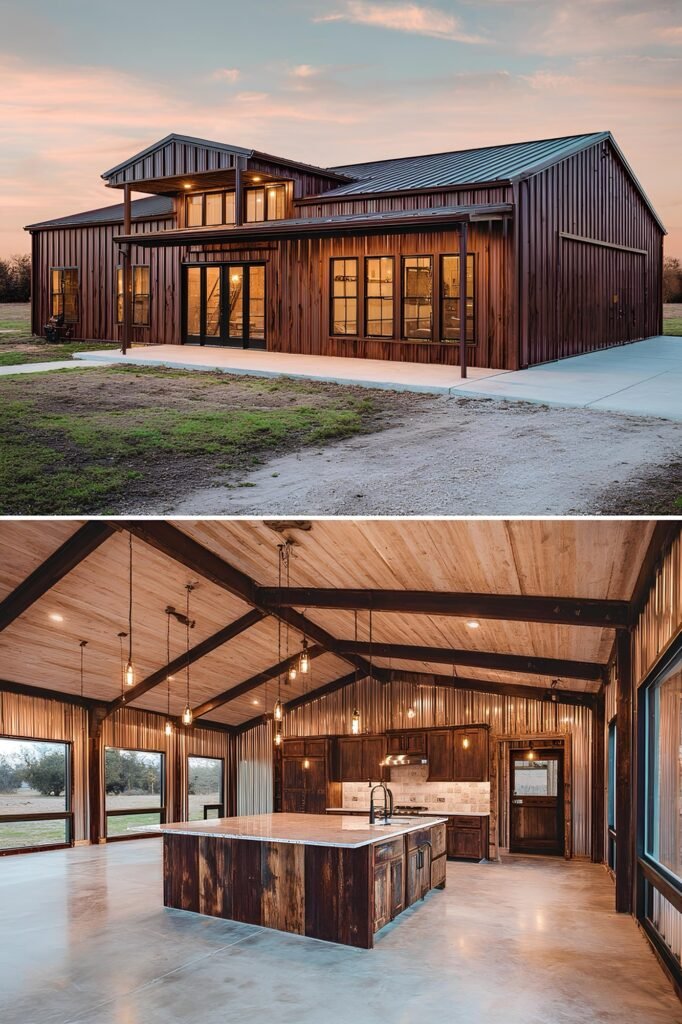
Barndominium 4
Rust-toned vertical metal siding with a dark standing seam roof, wide covered front porch, and large black-framed windows. Est. 1,500–1,800 sq ft. Est. build cost: $95,000–$100,000.
Slab vs. Pier Foundation: The First Real Cost Decision
The foundation is where a lot of barndominium budgets get blindsided. A monolithic slab — the most common choice — runs about $6 to $12 per square foot depending on thickness, rebar requirements, and local concrete pricing. On a 1,200 square foot footprint, you’re looking at $8,000 to $14,000 just for the pour.
Pier foundations are cheaper upfront but require more careful structural planning, and some lenders won’t finance a home on piers. If you’re planning to get a construction-to-permanent loan, confirm with your lender before you set a single post. This single call has saved more than a few owners from having to redo their plans late in the game.
Barndominium 5
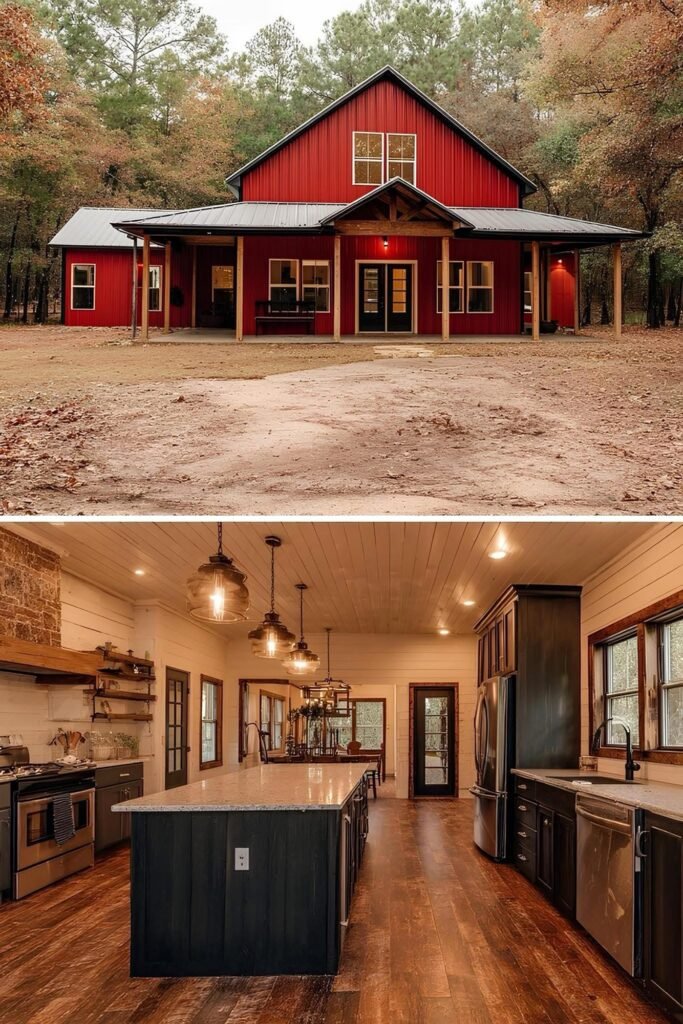
Bright red vertical metal siding with a gray metal roof, centered gable entry, and a full-length covered front porch supported by wood posts. Est. 1,400–1,700 sq ft. Est. build cost: $90,000–$100,000.
Barndominium 6
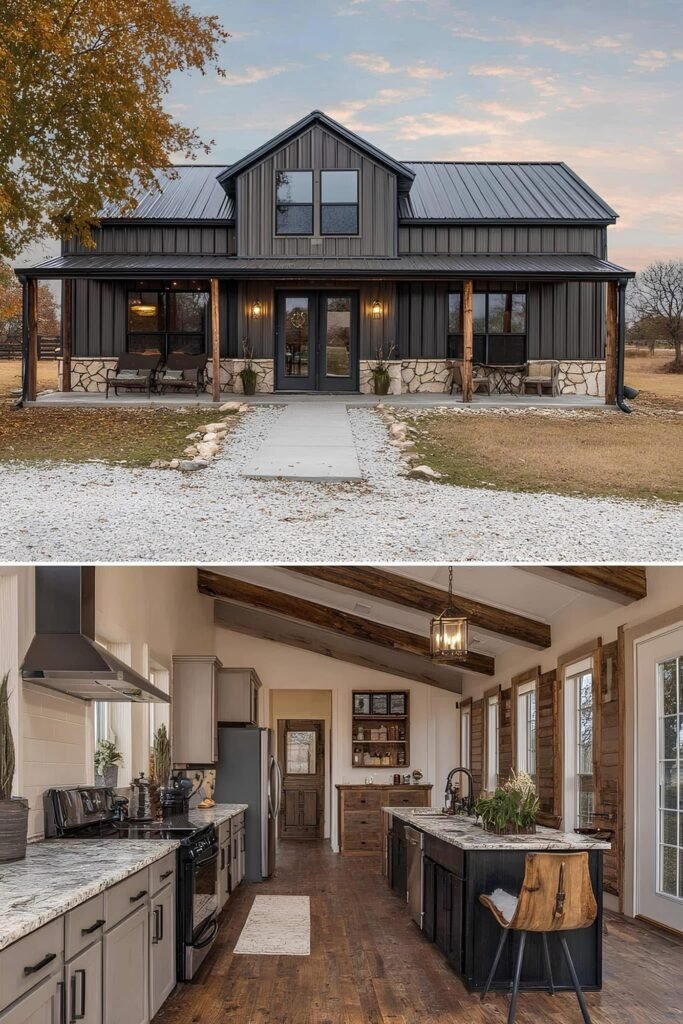
Charcoal gray vertical metal siding with a matching metal roof, central gable dormer, and a full-width covered front porch supported by wood posts. Stone skirting along the base adds contrast to the exterior. Est. 1,400–1,700 sq ft. Est. build cost: $95,000–$100,000.
How These 30 Owners Kept Labor Costs Down
Labor is the variable nobody wants to talk about honestly. On paper, a barndominium’s simple box shape should be cheaper to frame and finish than a traditional home with complex rooflines and load-bearing interior walls. In practice, finding contractors who are comfortable with metal building interiors — spray foam application, steel framing studs, corrugated interior walls — isn’t always easy.
The owners in this collection used a few consistent strategies. Several acted as their own general contractor, hiring individual trades rather than a full-service builder. Others joined owner-builder networks in their state where vetted subcontractors already understood barndominium-specific work. A handful did the interior framing, insulation, and drywall themselves over several weekends, cutting $15,000 to $20,000 from the finish budget.
Barndominium 7
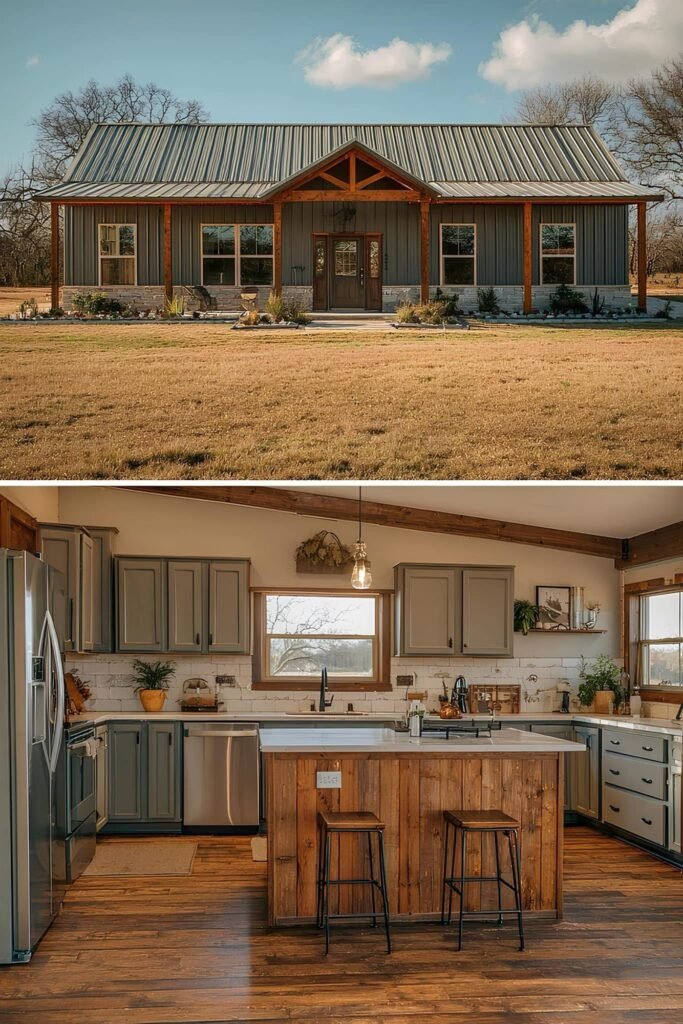
Muted green-gray vertical metal siding with a light metal roof, centered gable porch entry with exposed wood truss, and evenly spaced front windows. Stone skirting along the base adds a rustic finish. Est. 1,300–1,600 sq ft. Est. build cost: $90,000–$100,000.
Spray Foam vs. Fiberglass Batt: The Insulation Debate
If there’s one interior decision that separates a comfortable barndominium from a miserable one, it’s insulation. Steel conducts heat and cold aggressively. Without the right insulation strategy, a barndo can feel like an oven in July and a freezer in January regardless of what your HVAC system does.
Closed-cell spray foam is the gold standard. It seals the steel frame completely, stops condensation, and delivers R-values in the R-6 to R-7 per inch range. A full spray foam job on a 1,500 square foot barndo typically costs $8,000 to $14,000 — significant, but worth every dollar long-term. Owners who cut this cost with batt insulation often regret it within the first summer. Several of the homes in this article used a hybrid approach: spray foam on the roof deck and exterior walls, batts in interior partition walls to save money.
Barndominum 8
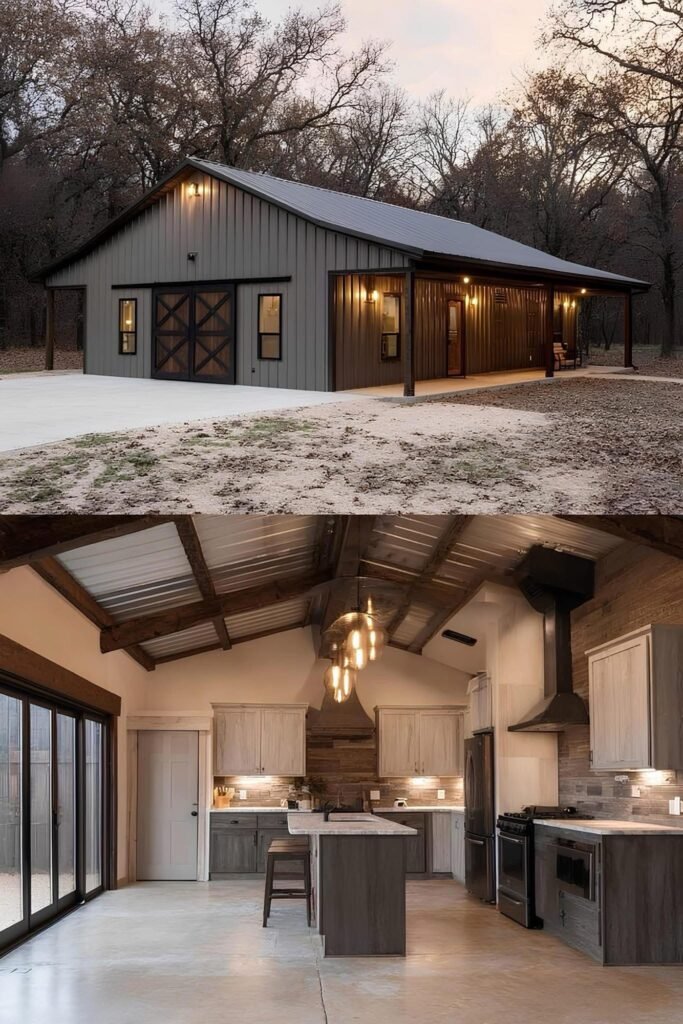
Light gray vertical metal siding with a matching metal roof, barn-style double doors, and a covered side porch supported by simple posts. Clean lines and minimal trim give it a straightforward, modern barn look. Est. 1,200–1,500 sq ft. Est. build cost: $85,000–$100,000.
Barndominium 9
Soft beige vertical metal siding with a gray metal roof, wraparound covered porch, and simple wood support posts. A curved concrete walkway leads to the entry, giving it a relaxed, rural setting. Est. 1,200–1,500 sq ft. Est. build cost: $85,000–$100,000.

Small Footprint, Smart Layout: The 800–1,200 Sq Ft Builds
Not every sub-$100K barndo is a tiny house. But the ones in the 800 to 1,200 square foot range show what smart layout planning can do. A well-designed 1,000 square foot barndominium with one bedroom, one bathroom, an open kitchen-living space, and a utility room is genuinely livable for one or two people — and some of these builds came in under $65,000 all-in on the structure.
The trick is ruthless prioritization. Vaulted ceilings in the main living area cost almost nothing extra in a metal building but make the space feel twice its size. Keeping wet walls (kitchen and bath) on the same side of the building cuts plumbing rough-in time and cost. Eliminating hallways in favor of direct room access adds usable square footage without adding square footage.
Barndominium 10
Taupe vertical metal siding with a matching metal roof, compact covered front porch, and natural wood posts. Simple window layout and a modest footprint give it a clean, cabin-style appearance. Est. 1,100–1,400 sq ft. Est. build cost: $80,000–$95,000.

Mid-Range Builds: What $75K–$100K Gets You
In the $75,000 to $100,000 range, most barndo builders are working with 1,200 to 1,800 square feet, two to three bedrooms, and a real kitchen with actual finishes. This is the range where the majority of the homes in this article fall, and it’s where smart sourcing decisions matter most.
Cabinets are a good example. Stock cabinets from a home improvement store, installed by the owner, run $3,000 to $6,000 for a full kitchen. Semi-custom cabinets from a local shop run $10,000 to $18,000. The stock cabinets in most of these homes look perfectly fine because the owners spent time on the things that are harder to DIY — the flooring transitions, the trim work, the lighting.
Barndominium 11
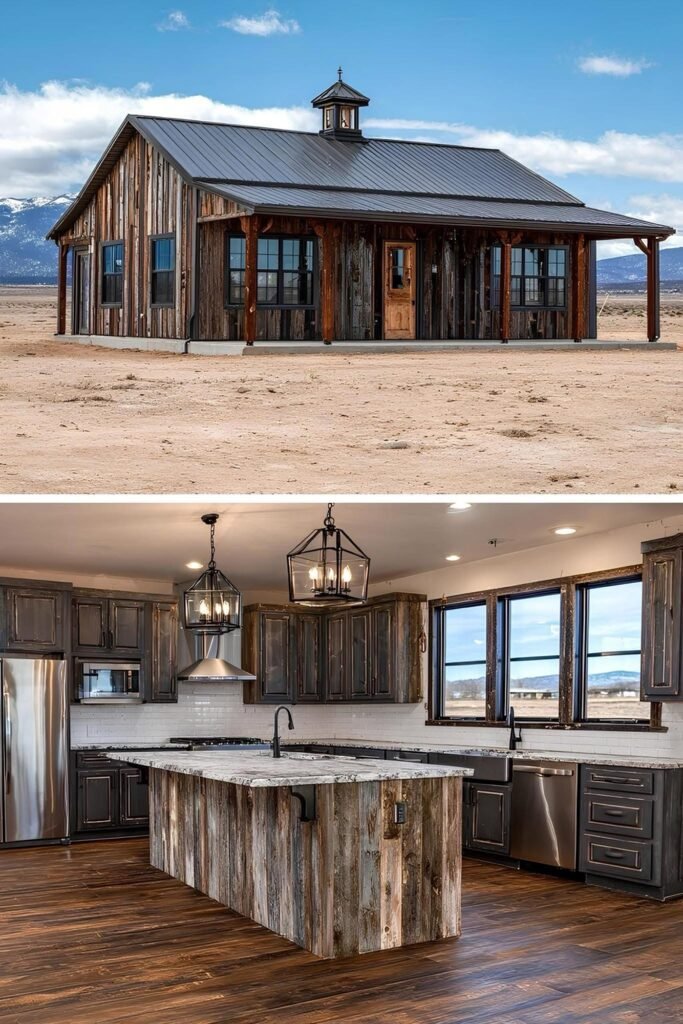
Weathered wood-style vertical siding with a dark metal roof, wide covered porch with heavy timber posts, and large black-framed windows. A small cupola adds a classic barn touch to the roofline. Est. 1,200–1,500 sq ft. Est. build cost: $90,000–$100,000.
See Also >>>> 35-beautiful-small-barndominiums-you-can-build-for-under-100k-10-smart-reasons-to-go-small/
Barndominium 12
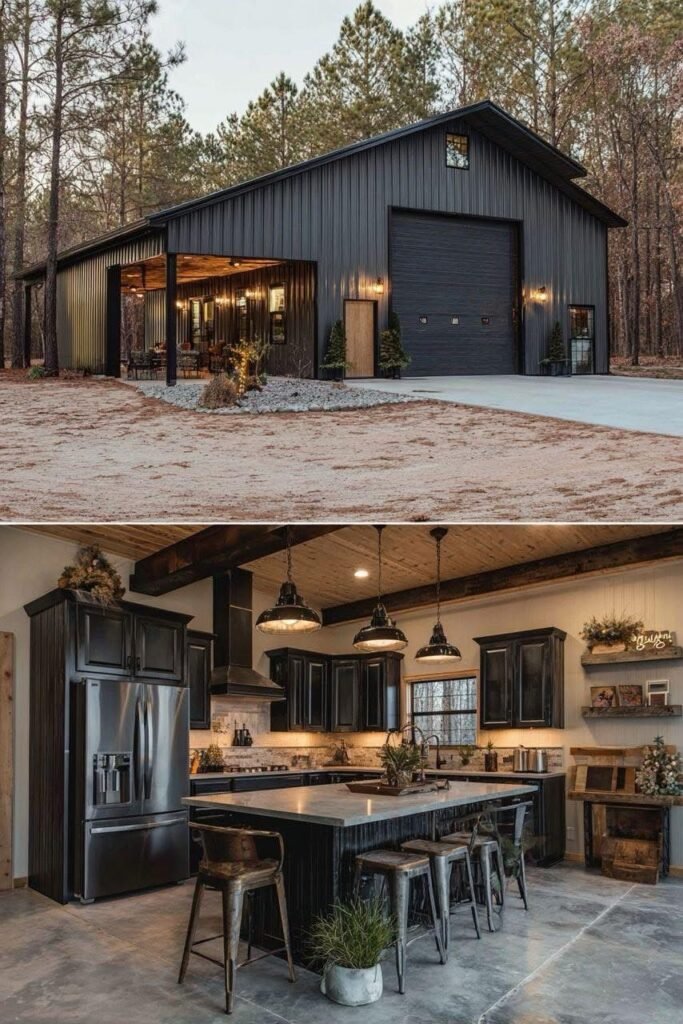
Black vertical metal siding with a matching metal roof, large garage-style door, and a covered side porch with open seating. Clean, modern lines give it a bold, barn-inspired look. Est. 1,400–1,700 sq ft. Est. build cost: $95,000–$100,000.
Salvage, Seconds, and Scratch-and-Dent: Where Real Savings Hide
Several of the owners in this collection became skilled at sourcing materials from non-traditional channels. Scratch-and-dent appliance stores regularly sell functionally perfect refrigerators, ranges, and dishwashers at 40 to 60 percent off retail. Habitat for Humanity ReStores carry doors, windows, fixtures, and sometimes cabinets pulled from renovation jobs — all functional, all cheap.
Metal roofing and siding seconds — panels with cosmetic flaws or minor dents — are available directly from manufacturers at steep discounts, and on a working barndominium, nobody will ever notice the difference. One owner in this group sourced 2,400 square feet of corrugated metal roofing as seconds and saved $4,200 compared to first-quality pricing.
Barndominium 13
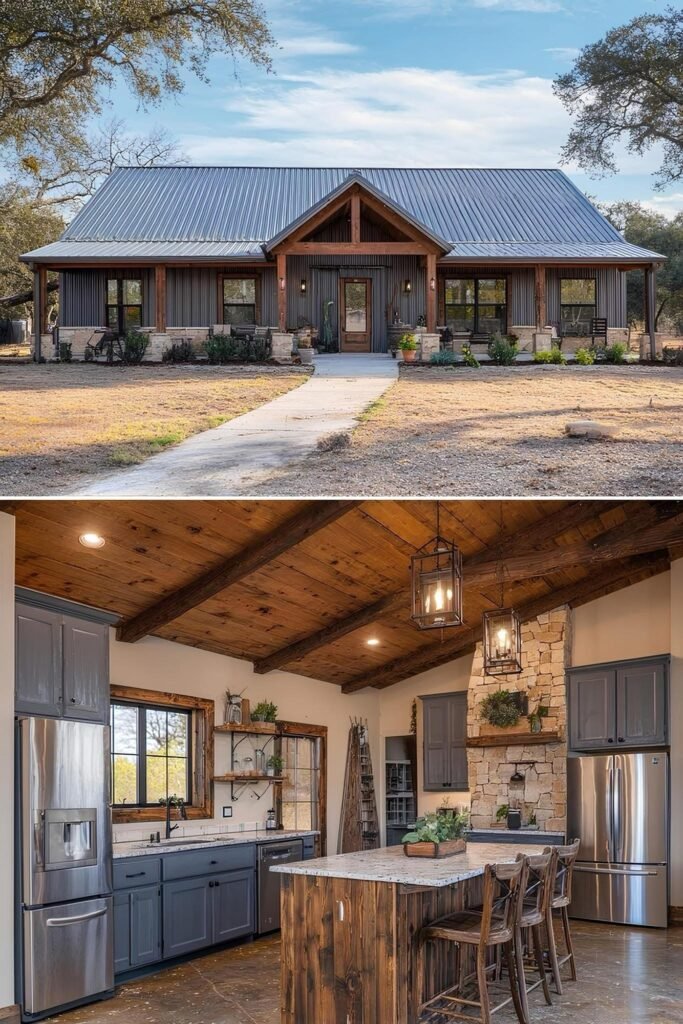
Dark gray vertical metal siding with a light metal roof, centered gable porch with exposed wood beams, and a full-length covered front porch supported by timber posts. Stone accents along the base complete the exterior. Est. 1,400–1,700 sq ft. Est. build cost: $95,000–$100,000.
The Permit and Inspection Reality Nobody Prepares You For
Here’s something experienced builders know that first-timers often don’t: the permit and inspection process for a metal building used as a primary residence is handled differently county by county. Some counties have specific codes for residential metal buildings. Others treat them identically to stick-frame. A few rural counties have minimal inspection requirements. Some require third-party engineering stamps on the kit drawings.
Before you buy land, before you order a kit, call your county building department and ask directly: what do I need to permit and build a metal building as a primary residence? Get the answers in writing if you can. Three people in this article hit unexpected permitting costs or delays that could have been completely avoided with one phone call.
Barndominium 14
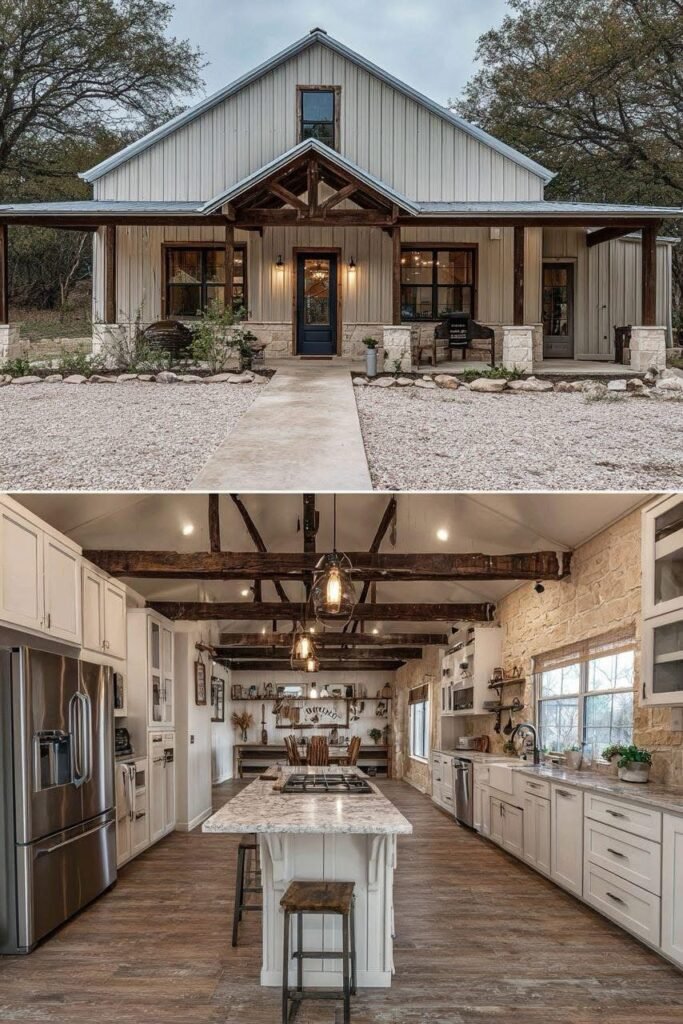
Light cream vertical metal siding with a gray metal roof, centered gable porch with exposed wood truss, and a full-width covered front porch supported by timber posts. Stone skirting along the base adds a classic farmhouse touch. Est. 1,400–1,700 sq ft. Est. build cost: $90,000–$100,000.
Barndominium 15
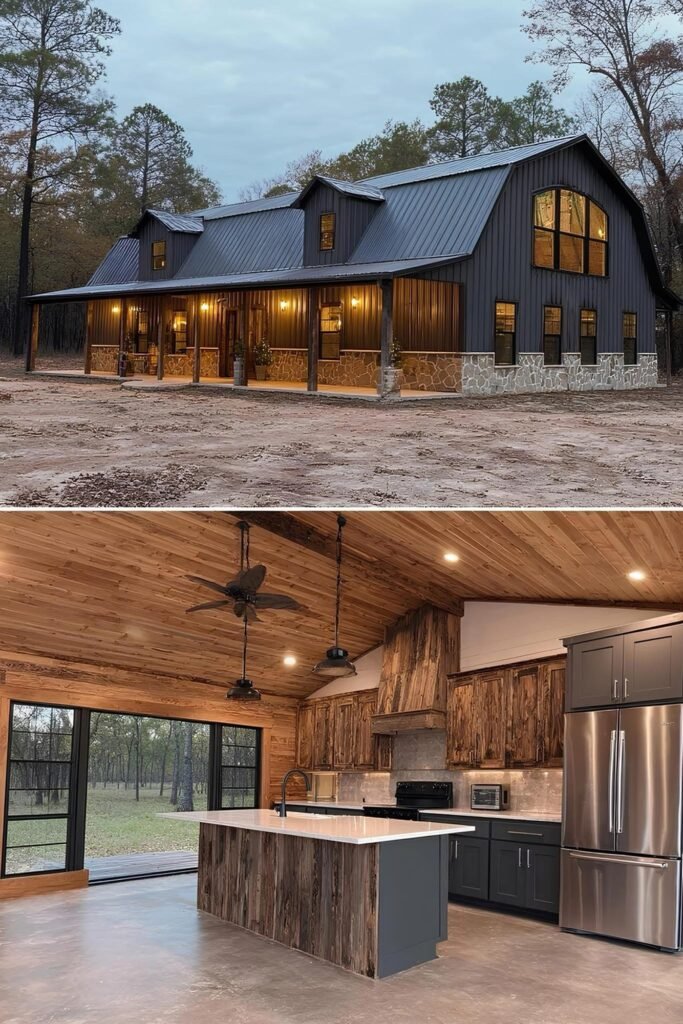
Dark charcoal vertical metal siding with a matching metal roof, multiple dormers, and a full-length covered front porch with wood posts. Large arched window and stone skirting add a bold, upscale barn look. Est. 1,600–1,900 sq ft. Est. build cost: $95,000–$100,000.
Rural vs. Suburban: How Location Shapes Your Budget
Land cost is one thing. But where you build affects your construction budget in ways that go beyond the land purchase price. Rural builds often require a private well ($4,000–$12,000) and septic system ($8,000–$20,000 depending on soil and system type) instead of utility hookups. Those two line items alone can represent 20 to 30 percent of a $100K budget.
On the other hand, rural land is dramatically cheaper per acre, permitting is often simpler, and there are no HOA restrictions — which in suburban or semi-rural areas frequently prohibit metal buildings altogether. Every owner in this collection verified HOA and deed restriction status before buying land. Not doing so is a mistake that’s expensive and time-consuming to undo.
Barndominium 16
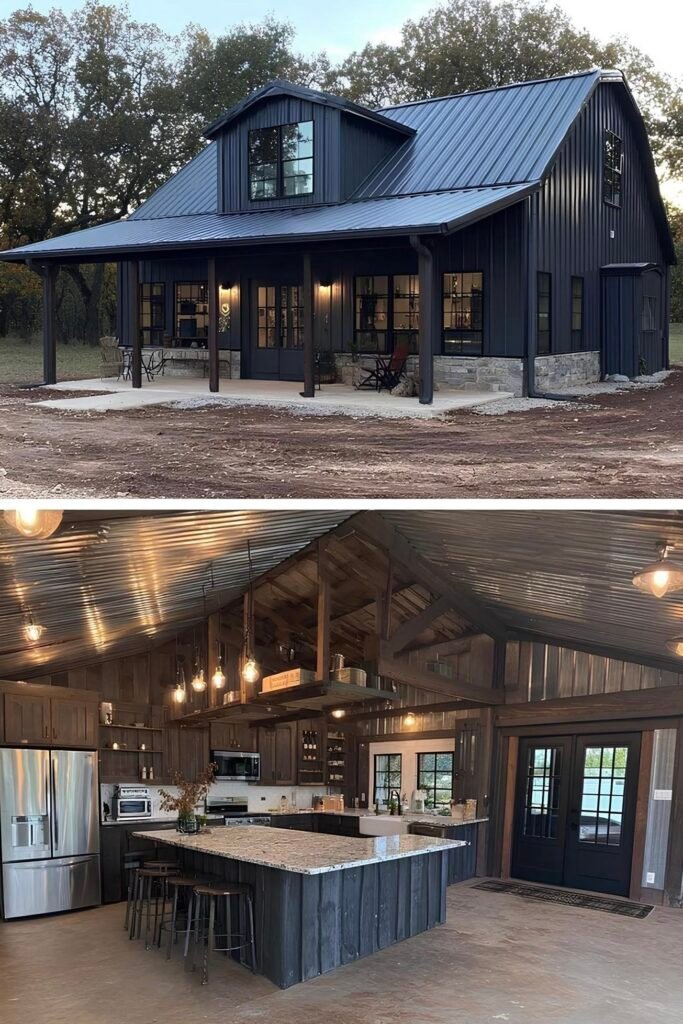
Dark blue vertical metal siding with a matching metal roof, centered dormer, and a wide covered front porch supported by simple posts. Stone skirting along the base adds contrast to the clean exterior. Est. 1,400–1,700 sq ft. Est. build cost: $95,000–$100,000.
Phased Construction: Building What You Can Now, Adding Later
One approach that appears repeatedly in this collection is phased construction. The owner builds a functional core — one bedroom, one bath, kitchen, living area — within the original budget, then adds square footage or finishes as cash allows. Because metal buildings are engineered for expansion, adding a lean-to, a garage bay, or even a full addition is structurally straightforward compared to stick-frame.
Several owners in this article built their home in two phases over three to five years, starting with a finished 800 square foot core and expanding to 1,600 or 2,000 square feet without a second major loan. This approach also appeals to some lenders, who can more easily underwrite a smaller, simpler initial build.
Barndominium 17
Weathered gray vertical metal siding with a light metal roof, barn-style wood shutters, and a covered side porch supported by timber posts. Simple lines and natural finishes give it a rustic, cabin-like feel. Est. 1,200–1,500 sq ft. Est. build cost: $85,000–$100,000.
Barndominium 18
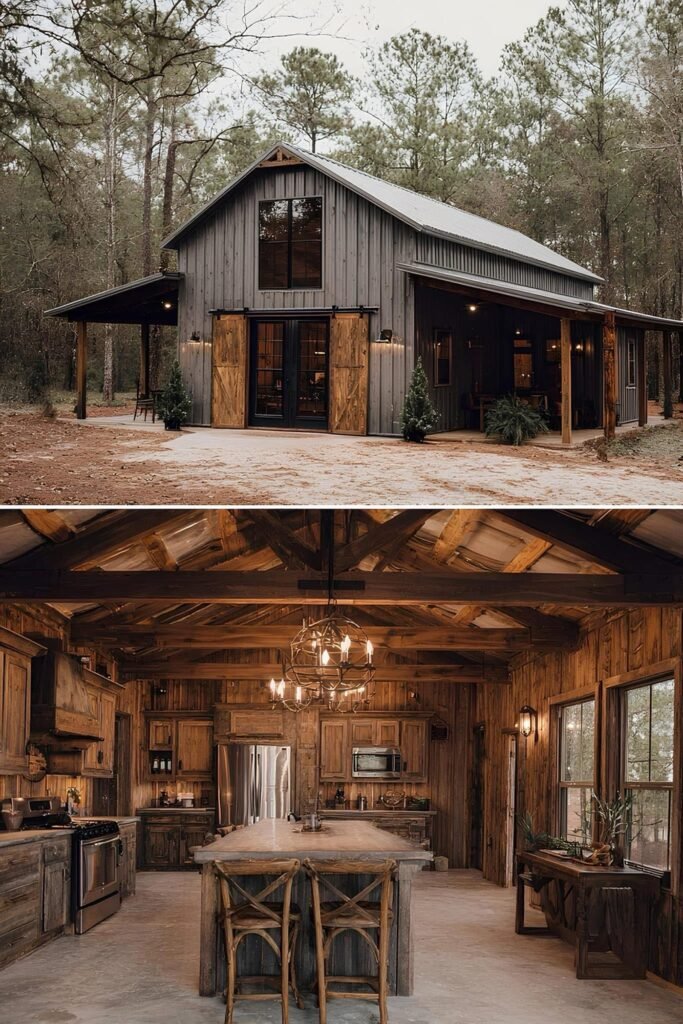
Light gray vertical metal siding with a matching metal roof, wraparound covered porch, and warm wood support posts. A small cupola and extended side profile give it a classic barn-inspired shape. Est. 1,500–1,800 sq ft. Est. build cost: $95,000–$100,000.
Interior Design on a Tight Budget: What Works
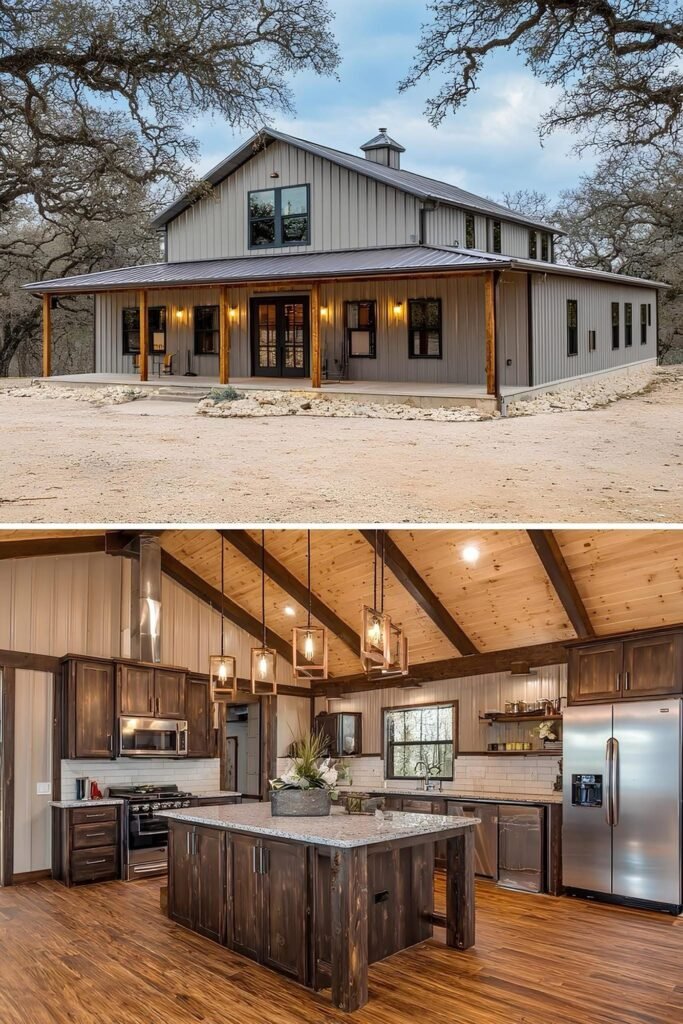
The interior of a well-executed barndominium doesn’t need to look like a bare metal box. The owners in this collection used a few repeating strategies that punched above their budget. Exposed steel posts and beams were left visible rather than drywalled — this reads as intentional industrial design, not unfinished construction. Polished concrete floors ran $3 to $6 per square foot installed and held up better than budget LVP over time.
Shiplap accent walls, often installed as DIY projects, add warmth without requiring custom millwork. Black hardware throughout — door handles, cabinet pulls, plumbing fixtures — creates a cohesive look at minimal cost. Barn doors on the bedroom and bathroom saved framing labor and became a design feature rather than an afterthought.
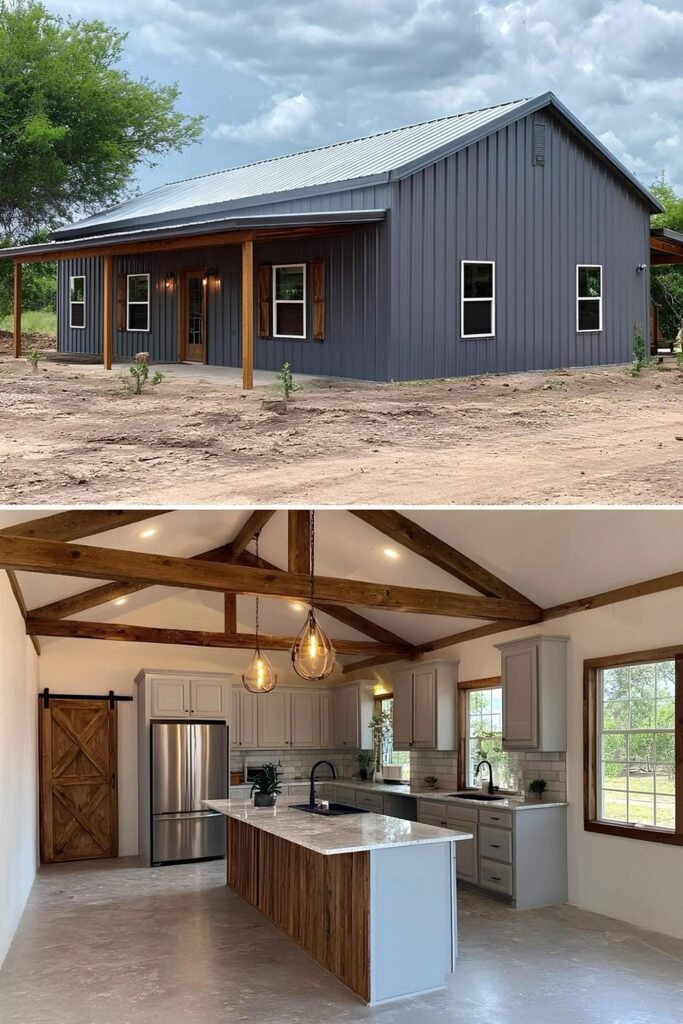
Barndominium 19
Dark gray vertical metal siding with a light metal roof, simple covered front porch, and natural wood posts. Clean rectangular form with minimal trim gives it a practical, no-frills barn style. Est. 1,100–1,400 sq ft. Est. build cost: $80,000–$95,000.
HVAC Choices That Fit a Metal Building
Heating and cooling a metal building efficiently requires a different approach than a traditional home. Mini-split systems — ductless heat pumps — are the preferred choice for most barndominium owners for good reason. They’re energy-efficient, zoned by unit, and don’t require ductwork running through a spray-foam ceiling. A two or three-zone mini-split system for a 1,500 square foot barndo typically costs $6,000 to $10,000 installed.
Propane forced-air systems are common in rural builds where natural gas isn’t available. Wood stoves and pellet stoves appear in several of the colder-climate builds in this article, often as a primary heat source backed up by electric baseboard for the coldest nights. Whatever you choose, size it for the insulated envelope, not the square footage — a well-insulated barndo heats and cools more efficiently than its size suggests.
Barndominium 20
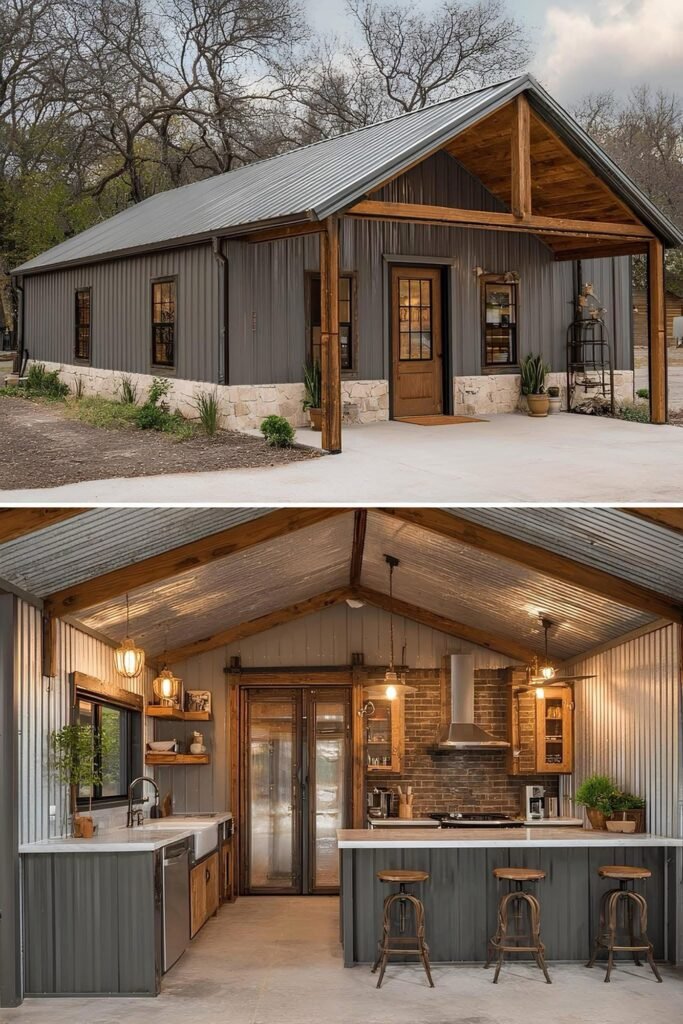
Dark gray vertical metal siding with a light metal roof, front gable entry with exposed wood beams, and stone skirting along the base. A small covered porch with timber posts completes the clean, rustic look. Est. 1,100–1,400 sq ft. Est. build cost: $85,000–$100,000.
Barndominium 21
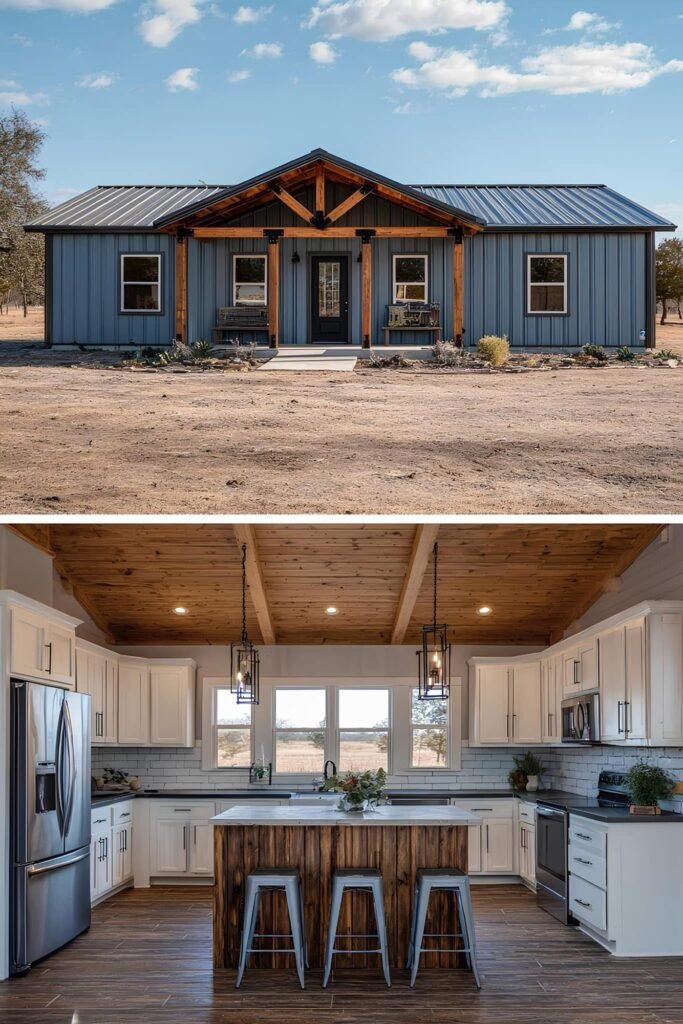
Blue-gray vertical metal siding with a matching metal roof, centered gable entry with exposed wood beams, and a small covered front porch supported by timber posts. Symmetrical window layout gives it a clean, balanced look. Est. 1,200–1,500 sq ft. Est. build cost: $85,000–$100,000.
Construction Loan Approval: What Lenders Are Actually Looking For
This is the section most barndominium planning guides skip or gloss over, and it’s arguably the most important one if you don’t have cash in hand.
Construction loans for barndominiums are available, but they require more preparation than a standard mortgage. Lenders — particularly local community banks and credit unions — are the most reliable source. National banks and most conventional lenders either won’t touch owner-builder barndo projects or require such extensive documentation that the process becomes impractical.
The first thing any lender will ask for is a detailed construction cost breakdown, sometimes called a draw schedule. This isn’t a rough estimate. It’s a line-item budget showing every cost category: site prep, foundation, framing, roofing, insulation, rough plumbing, rough electrical, HVAC, drywall, finishes, fixtures, and a contingency reserve of at least ten percent. Lenders who specialize in rural and agricultural properties — Farm Credit Services is one notable example — often have construction loan programs specifically designed for metal building homes and are more comfortable with the property type.
Barndominium 22
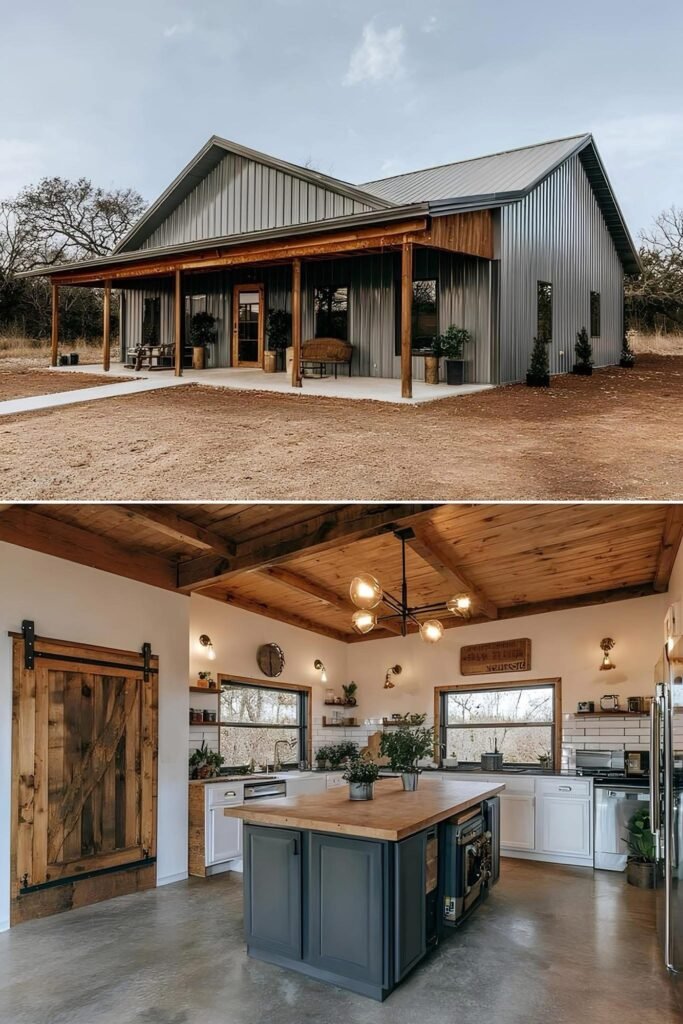
Silver-gray vertical metal siding with a matching metal roof, long covered front porch, and simple wood support posts. Clean lines and a low-profile design give it a practical, modern barn look. Est. 1,200–1,500 sq ft. Est. build cost: $85,000–$100,000.
Appraisal Challenges and How to Navigate Them
Here’s the honest reality: barndominiums are still difficult to appraise in many markets because there aren’t enough comparable sales. An appraiser who has never worked with a metal building home may undervalue yours, which can kill a loan or reduce the amount you can borrow. This is a known problem in the barndominium community, and it’s solvable with preparation.
The solution is to find a lender who regularly works with barndominiums and has access to appraisers who do too. Before you even apply, ask the lender directly: do your appraisers have experience with metal building homes? Have you closed construction loans on barndominiums in this county? A lender who can answer yes to both questions is worth finding even if their rate is slightly higher than a bank that can’t.
Barndominium 23
Dark gray vertical metal siding with a matching metal roof, small covered front porch, and simple wood support posts. A side extension with a garage-style opening adds extra functionality. Est. 1,200–1,500 sq ft. Est. build cost: $85,000–$100,000.
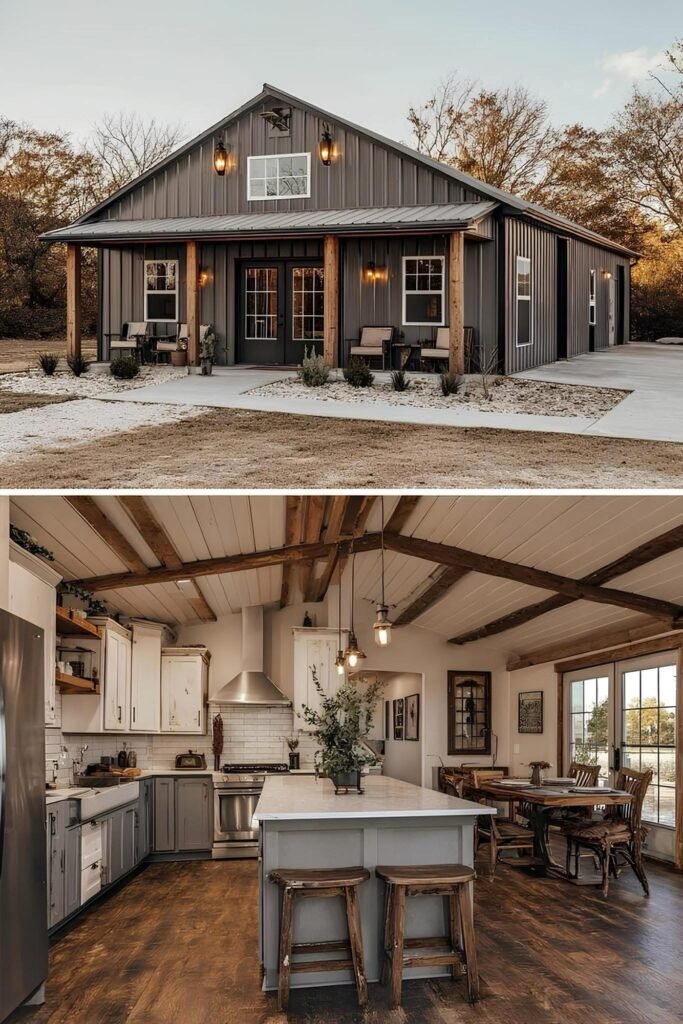
Barndominium 24
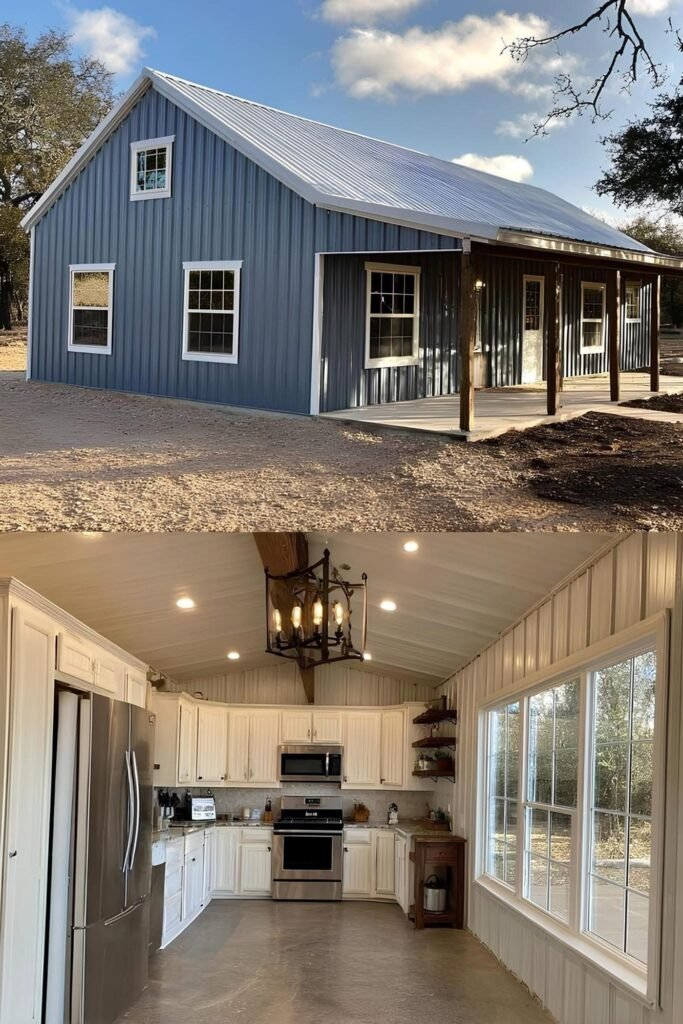
Blue-gray vertical metal siding with white trim, a light metal roof, and a simple covered front porch supported by wood posts. Clean lines and bright contrast give it a classic, straightforward barn style. Est. 1,100–1,400 sq ft. Est. build cost: $80,000–$95,000.
The Owner-Builder License Question
In many states, you can serve as your own general contractor — pulling permits, hiring subs, and managing construction — without a contractor’s license if the home is your primary residence. This is called owner-builder status, and it’s a legitimate path that several owners in this article used to save $15,000 to $30,000 in general contractor markup.
The catch is that some lenders won’t issue construction loans to owner-builders. They want a licensed general contractor on the project for liability and completion assurance. If you plan to act as your own GC, confirm this with your lender before you apply. Some will work with owner-builders who can demonstrate construction experience. Others won’t. Knowing this early keeps your plan intact.
Barndominium 25
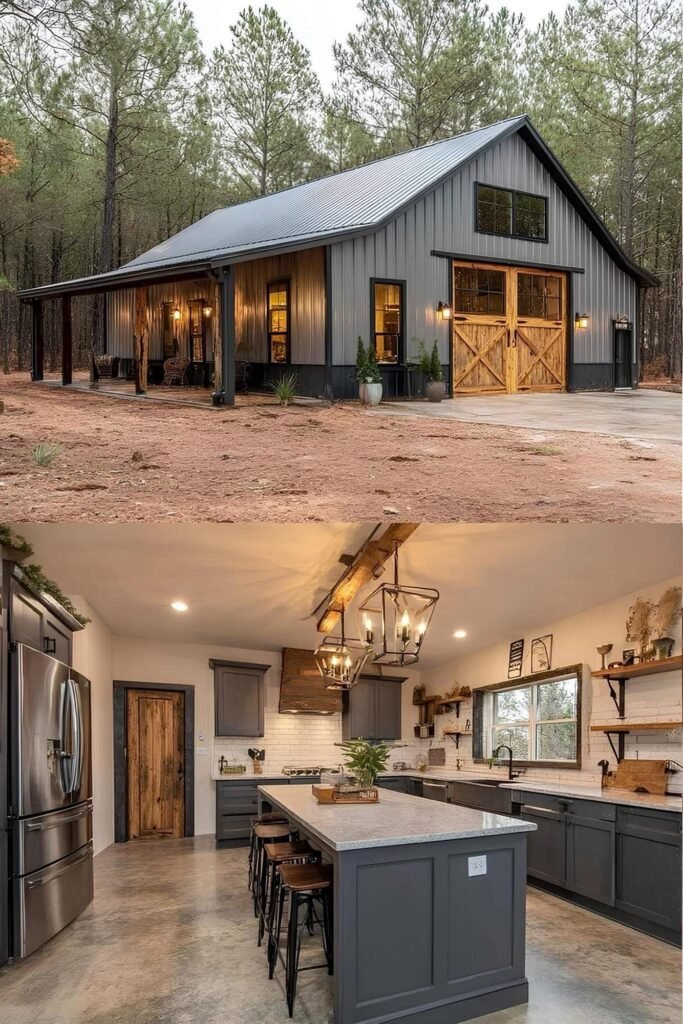
Gray vertical metal siding with black trim, a matching metal roof, and a long covered porch supported by dark posts. Large barn-style double doors add a classic farmhouse touch to the front. Est. 1,400–1,700 sq ft. Est. build cost: $90,000–$100,000.
Credit Score, Down Payment, and Loan-to-Value Reality
Construction loans carry more risk for lenders than standard purchase mortgages, and the underwriting reflects that. Expect to need a credit score of at least 680, though 720 and above puts you in a meaningfully better position. Down payments typically run 20 to 25 percent of the total project cost — land plus construction — which on a $150,000 combined project means $30,000 to $37,500 upfront.
Loan-to-value ratios on construction loans are based on the appraised value of the completed home, not the cost to build. If your completed barndominium appraises at $160,000 and you’re building for $95,000 on $40,000 of land, a lender may actually offer more favorable terms than you expected. The key is getting a realistic appraisal estimate before you apply, not after.
Barndominium 26
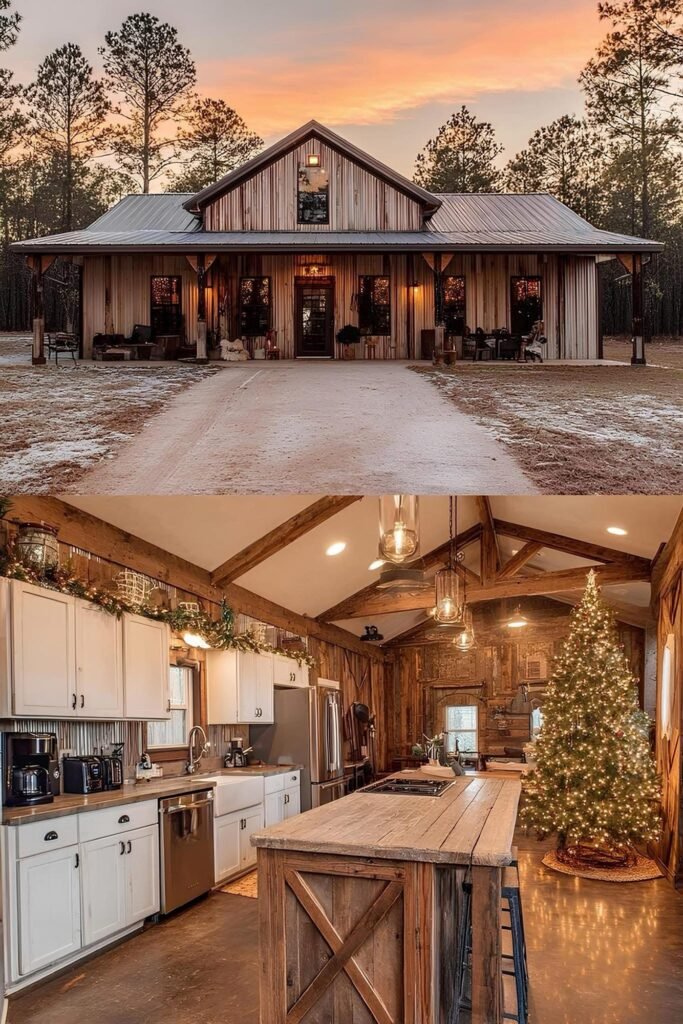
Natural wood-toned vertical siding with a light metal roof, centered gable dormer, and a full-width covered front porch supported by timber posts. Warm exterior lighting and symmetrical windows give it a classic barn-style look. Est. 1,400–1,700 sq ft. Est. build cost: $90,000–$100,000.
Draw Schedules, Inspections, and How Funds Are Released
Unlike a standard home purchase mortgage where you receive a lump sum at closing, construction loans release funds in stages called draws. Each draw corresponds to a completed phase of construction — foundation pour, framing completion, roofing, rough-in inspections, and so on. Before each draw, the lender typically sends an inspector to verify the work is complete.
This structure protects the lender, but it also creates cash flow requirements for the builder. You need enough working capital to pay subcontractors before the draw is released, since inspections and fund transfers take time. Most experienced barndo builders keep $10,000 to $15,000 available in a separate account for this purpose. Running out of float mid-construction because you didn’t account for draw timing is a preventable problem.
Barndominium 27
Cream vertical metal siding with a light metal roof, small front gable porch with exposed wood beams, and simple wood support posts. Minimal detailing and a compact footprint give it a clean, practical barn-style look. Est. 1,100–1,400 sq ft. Est. build cost: $80,000–$95,000.
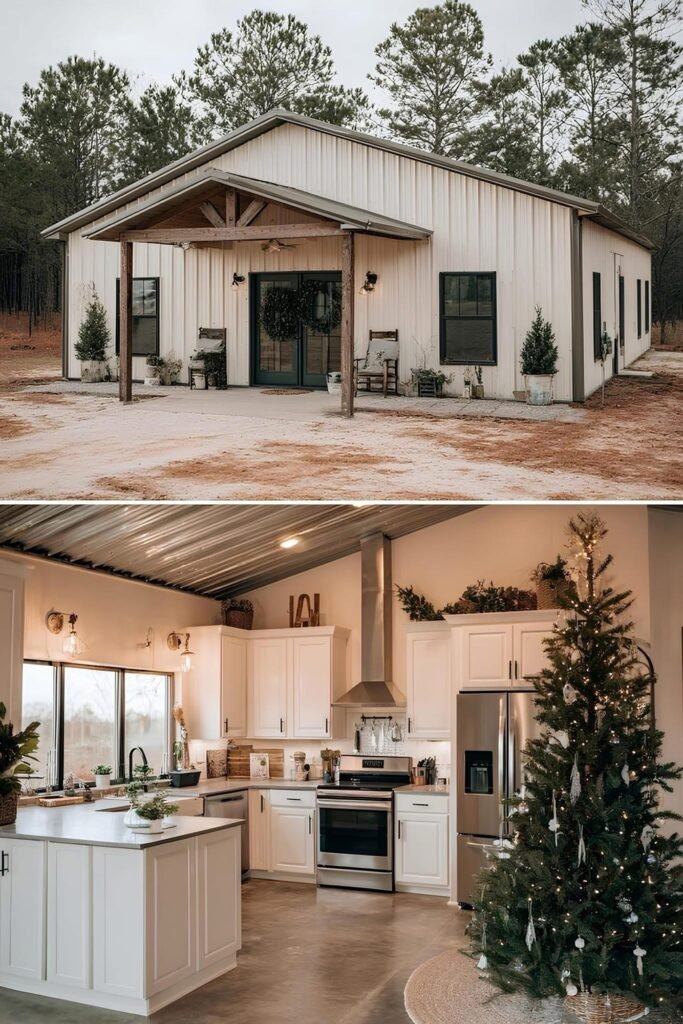
Barndominium 28
Dark gray vertical metal siding with a light metal roof, simple front porch, and evenly spaced wood posts. Clean rectangular form with minimal detailing gives it a straightforward, functional barn style. Est. 1,100–1,400 sq ft. Est. build cost: $80,000–$95,000.
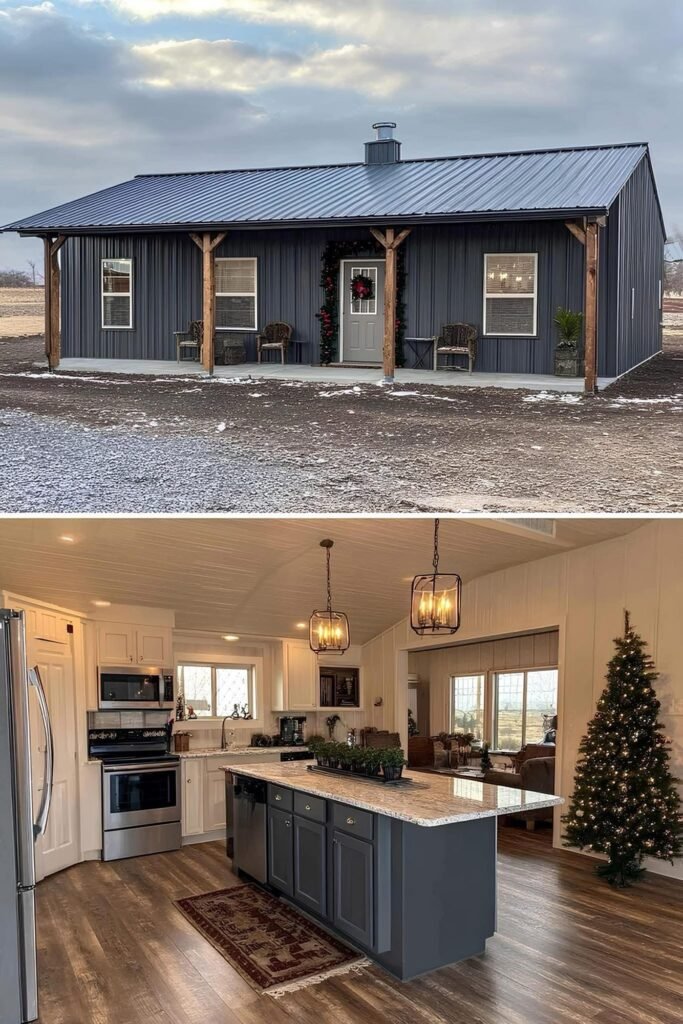
Converting the Construction Loan to a Permanent Mortgage
Most construction loans are structured as construction-to-permanent loans, sometimes called one-time-close or single-close loans. At the end of construction, the loan automatically converts to a standard mortgage without a second closing. This saves the cost and hassle of two separate closings and locks in your permanent rate at the time of initial approval.
Two-time-close loans — where the construction loan and permanent mortgage are separate transactions — offer more flexibility if your situation changes during construction, but they come with two sets of closing costs. For most barndominium builders on a tight budget, the one-time-close is the better option as long as you’re confident in your timeline and cost projections.
Barndominium 29
Weathered gray vertical metal siding with a light metal roof, barn-style double doors, and a covered front porch with string lighting and timber posts. A small ridge vent adds to the traditional barn profile. Est. 1,300–1,600 sq ft. Est. build cost: $90,000–$100,000.
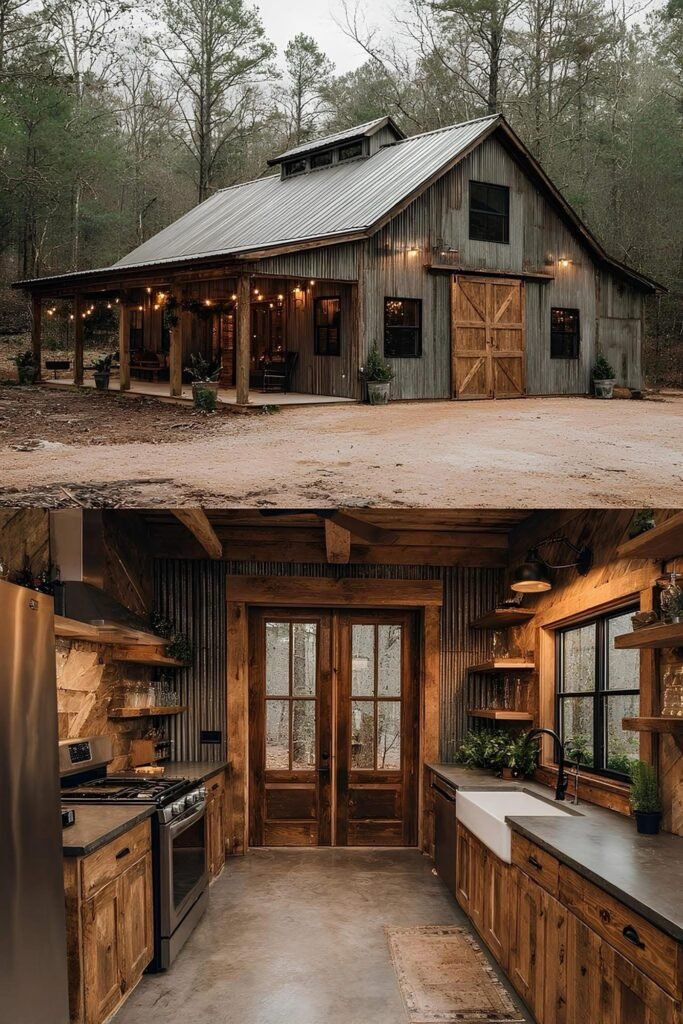
What These 30 Builds Prove
Every barndominium in this collection proves the same thing: the sub-$100K build isn’t a fantasy or a fluke. It’s the result of disciplined planning, smart sourcing, and an honest understanding of where costs live. The people who hit their budget weren’t lucky. They were prepared. They researched kit suppliers before committing. They called their county building department early. They found lenders who actually understood what they were building. They did the work they could do themselves and hired out only what they couldn’t.
The barndominium market has matured enough that there are now lenders, appraisers, inspectors, and subcontractors in most regions who have real experience with metal building homes. That network didn’t exist ten years ago, and it makes the path easier than it’s ever been. If you’re serious about building, start with the loan conversation and work backward — knowing what you can finance shapes every other decision in the plan.
Barndominium 30
Light gray vertical metal siding with a matching metal roof, front gable entry with exposed wood beams, and a wraparound covered porch supported by timber posts. Clean lines with warm wood accents give it a modern farmhouse feel. Est. 1,300–1,600 sq ft. Est. build cost: $90,000–$100,000.
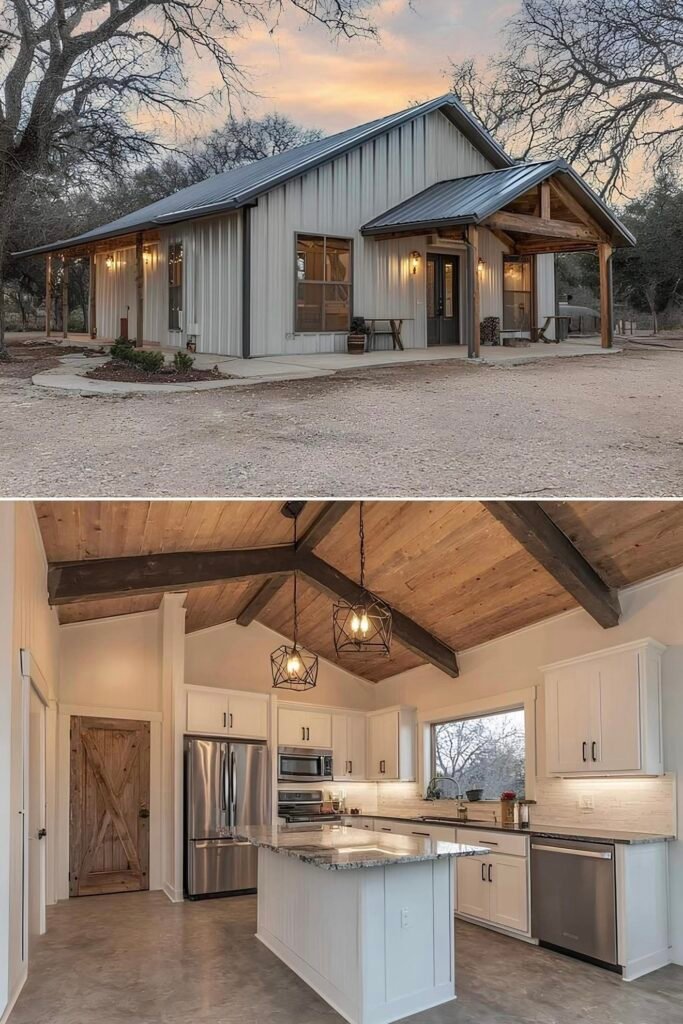
The 30 homes in this article aren’t outliers. They’re examples. Your build can join that list.
Want the Floor Plan for Any of These Barndominiums?
Every barndominium featured in this article has a floor plan available for purchase. If you saw a build that fits what you’re looking for — the layout, the square footage, the price range — you can get the actual plan used to build it. These aren’t generic templates. They’re the real drawings behind the homes you just looked at.
To purchase a floor plan, email aycustomhomedesign@gmail.com and mention which barndominium caught your eye. Include the image number if you can. Plans are available individually, and the team can answer questions about customizing any of them to fit your lot, your budget, or your local building requirements.